Wohlstand Enterprises

Programmable Logic Controllers

Home / Products / Programmable Logic Controllers

Programmable Logic Controllers

Advanced Programmable Logic Controllers for Reliable Industrial Automation

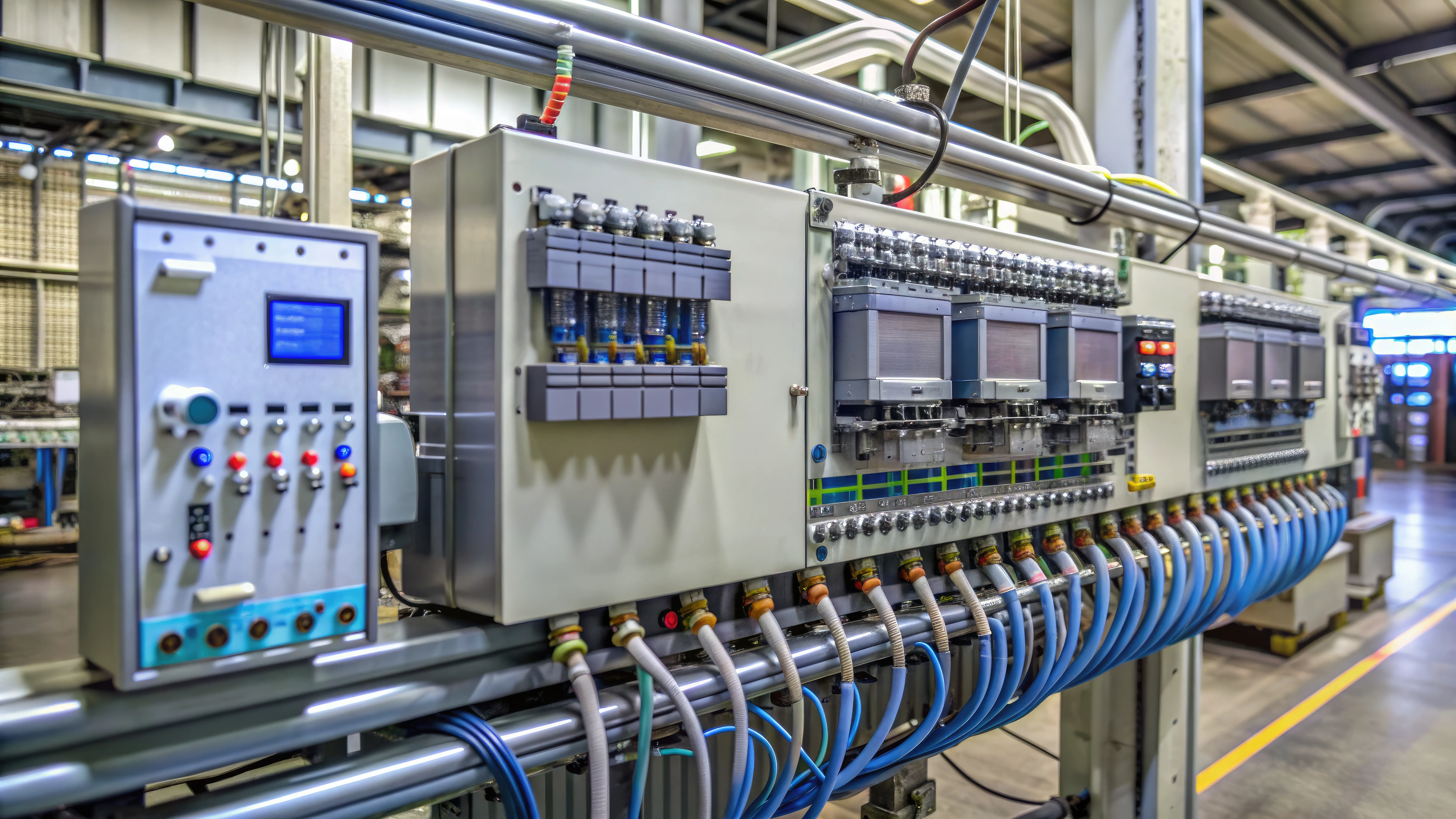
Programmable Logic Controllers (PLCs) are industrial-grade digital computers designed for automation and control of manufacturing processes, machinery, and critical infrastructure. Built for reliability in harsh environments, PLCs provide real-time control, monitoring, and data processing, making them essential for modern industrial operations.

Our PLC solutions offer high performance, scalability, and seamless integration with existing systems—empowering businesses to improve efficiency, reduce downtime, and enhance operational precision.

Key Features :

  •   High-Speed Processing: Rapid execution of control logic for real-time operations
  •   Modular Design: Flexible I/O expansion and customization
  •   Robust Build Quality: Resistant to vibration, temperature extremes, dust, and electrical noise
  •   User-Friendly Programming: Supports ladder logic, function block, structured text, and more
  •   Connectivity: Integration with SCADA, HMI, IoT platforms, and industrial networks
  •   Data Handling: Advanced diagnostics, logging, and remote monitoring capabilities
  •   Safety Integration: Built-in safety protocols for critical operations

Technical Specifications :

General Specifications

  •   Processor Speed: Up to 1 GHz (model dependent)
  •   Memory Capacity:
    •   Program Memory: 512 KB – 10 MB
    •   Data Memory: 256 KB – 5 MB
  •   Power Supply: 24V DC / 110–240V AC
  •   Operating Temperature: -20°C to +60°C
  •   Humidity: 5% to 95% non-condensing

Input/Output (I/O)

  •   Digital Inputs: 8 to 1024 channels
  •   Digital Outputs: Relay / Transistor outputs
  •   Analog Inputs: 4–20 mA, 0–10V
  •   Analog Outputs: 4–20 mA, 0–10V
  •   Expandable I/O Modules: Yes

Communication Interfaces

  •   Ethernet/IP
  •   Modbus TCP/RTU
  •   PROFINET / PROFIBUS
  •   RS-232 / RS-485
  •   CANopen

Programming & Software

  •   IEC 61131-3 compliant
  •   Supported Languages:
  •   Ladder Diagram (LD)
  •   Function Block Diagram (FBD)
  •   Structured Text (ST)
  •   Instruction List (IL)

Benefits :

  •   Improved Operational Efficiency
    PLCs automate repetitive tasks, reducing manual intervention and increasing production speed and accuracy.
  •   Enhanced Reliability
    Designed for continuous operation in harsh industrial environments, PLCs minimize downtime and maintenance costs.
  •   Scalability
    Modular architecture allows easy expansion as business needs grow.
  •   Real-Time Monitoring & Control
    Instant feedback and control ensure precise operation and quick response to changes.
  •   Cost Savings
    Reduced labor costs, lower energy consumption, and minimized errors lead to long-term savings.
  •   Flexibility
    Easily reprogrammed for different processes without changing hardware.

Applications :

Manufacturing Automation

  •   Assembly lines
  •   Robotics control
  •   Packaging systems

Process Industries

  •   Chemical plants
  •   Oil & gas refineries
  •   Water treatment facilities

Energy & Utilities

  •   Power generation control
  •   Smart grids
  •   Renewable energy systems

Building Automation

  •   HVAC systems
  •   Lighting control
  •   Security systems

Transportation & Infrastructure

  •   Traffic control systems
  •   Railway signaling
  •   Airport automation

Why Choose Wohlstand Enterprises PLCs?

  •   Proven industrial reliability
  •   Easy integration with legacy and modern systems
  •   Comprehensive technical support
  •   Customizable solutions for diverse industries
  •   Competitive pricing with high ROI

Frequently Asked Questions (FAQ)

What is a PLC?

A PLC (Programmable Logic Controller) is an industrial computer used to automate control processes in machinery and manufacturing.

How is a PLC different from a regular computer?

PLCs are designed for real-time control, durability, and reliability in harsh environments, unlike standard computers.

What industries use PLCs?

PLCs are used across manufacturing, energy, transportation, water treatment, and more.

Can PLCs be upgraded or expanded?

Yes, most PLCs have modular designs allowing easy expansion with additional I/O modules and features.

What programming languages are used for PLCs?

PLCs use IEC 61131-3 languages such as Ladder Logic, Function Block Diagram, and Structured Text.

Let’s Join Hands for an Automated Future!